

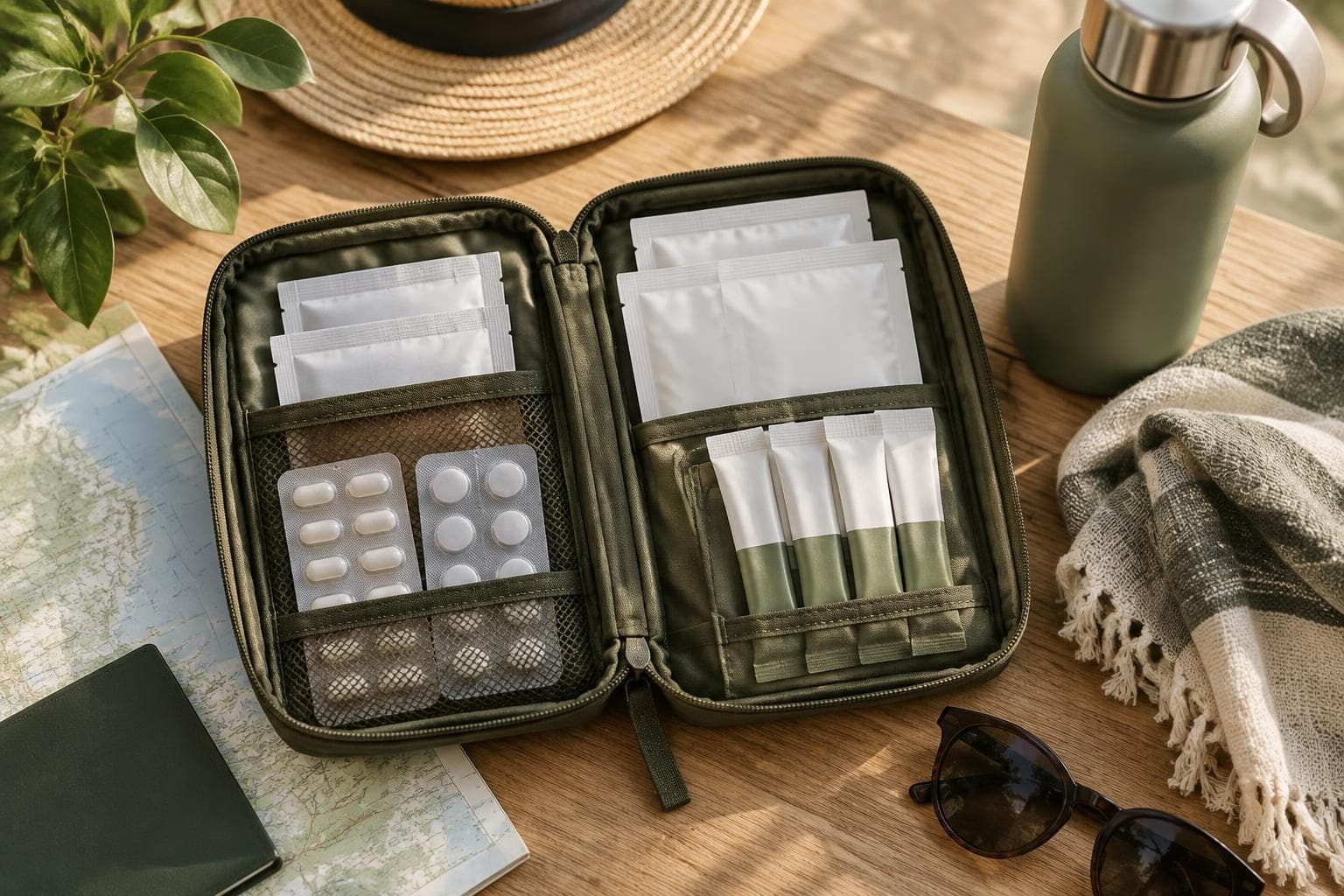
Travellers’ diarrhoea is usually linked to contaminated food or water. Most episodes improve with time and careful rehydration, but the risk and the support you may need depend on your destination and personal health.
How can I lower my risk?
- Wash or sanitise your hands before eating
- Choose freshly cooked food served piping hot
- Use sealed or properly treated drinking water
- Avoid ice, raw foods and unpasteurised dairy when hygiene is uncertain
Should I carry a standby treatment pack?
A pack may be useful for selected travellers, particularly where reliable medical help is difficult to reach or personal health makes dehydration more concerning. It is not automatically appropriate for everyone, so supply follows an individual consultation.
When should I seek medical help?
Seek prompt medical advice for blood in the stool, high fever, severe or persistent symptoms, or signs of dehydration. Pregnant travellers, young children, older people and anyone with an underlying health condition should seek advice earlier.